Porifera · sponges
Boring sponge
Cliona celata
Clionaidae · boring spongesIUCN: Not evaluated
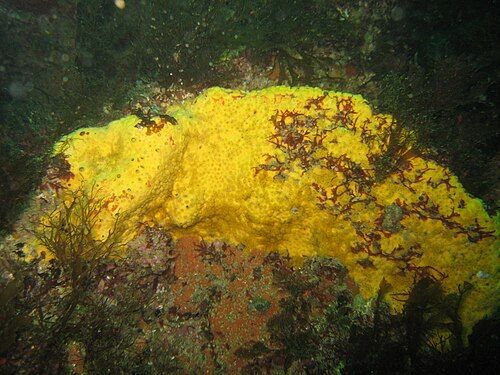

A yellow sponge that bores into oyster and clam shells using acid.
Fun factLook for tiny holes peppering old shells on Northeast beaches. That is boring sponge damage.
- Waters
- Northeast US, Northwest Atlantic, Northeast Atlantic
- Depth zone
- Coastal shallows & estuaries, Continental shelf
- Diet
- Bacteria & organic particles (filter feeder)
- Size
- Masses up to 1 m long
Classification
Porifera › Demospongiae › Clionaidae
- Kingdom Animalia animals
- Many-celled organisms that eat other living things for energy (heterotrophs)
- Cells have no cell walls
- Most can move at some stage of life
- Phylum Porifera sponges
- Body is a porous sac with no true tissues or organs
- Special collar cells (choanocytes) pump water through pores to filter food
- Skeleton made of tiny spikes (spicules) and/or spongy fibers
- Class Demospongiae demosponges
- The largest group of sponges, about 80% of all species
- Skeleton of silica spikes, flexible protein fibers (spongin), or both
- Includes the soft bath sponges people once harvested
- Family Clionaidae boring sponges
- Bore into shells and limestone by dissolving them with acid
- Often show only small yellow holes or bumps on the surface they live in
- Genus Cliona
- Species in the same genus are very close relatives and often look alike.
- Species Cliona celata Boring sponge
Closest relatives in the guide
- Breadcrumb sponge Halichondria panicea same class
- Giant barrel sponge Xestospongia muta same class