Cnidaria · cnidarians
Irukandji jellyfish
Carukia barnesi
Carukiidae · Irukandji jelliesIUCN: Not evaluated
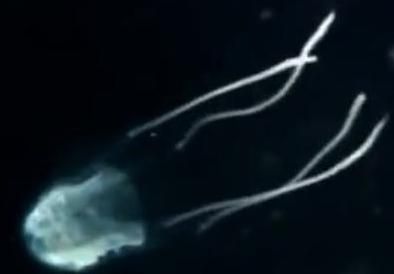

A tiny box jelly whose sting can cause severe, delayed whole-body symptoms.
Fun factIt is about the size of a fingernail.
- Waters
- Indo-Pacific
- Depth zone
- Coastal shallows & estuaries
- Diet
- Small fish & larvae
- Size
- Bell about 2 cm
Classification
Cnidaria › Cubozoa › Carukiidae
- Kingdom Animalia animals
- Many-celled organisms that eat other living things for energy (heterotrophs)
- Cells have no cell walls
- Most can move at some stage of life
- Phylum Cnidaria cnidarians
- Radially symmetric bodies with one opening that is both mouth and anus
- Stinging cells (cnidocytes) fire tiny harpoons (nematocysts)
- Two body forms: an attached polyp and a swimming bell (medusa)
- Class Cubozoa box jellyfish
- Box jellies: bell is cube-shaped, with tentacles from each corner
- Complex eyes, some with lenses, on four sense clubs
- Fast, active swimmers with very potent venom
- Family Carukiidae Irukandji jellies
- Small box jellies with one tentacle per corner
- Includes Irukandji jellies, whose sting causes delayed severe symptoms
- Genus Carukia
- Species in the same genus are very close relatives and often look alike.
- Species Carukia barnesi Irukandji jellyfish
Closest relatives in the guide
- Australian box jellyfish Chironex fleckeri same class